When Your Self-Esteem Keeps Dropping
It's Not Because You're Not Enough
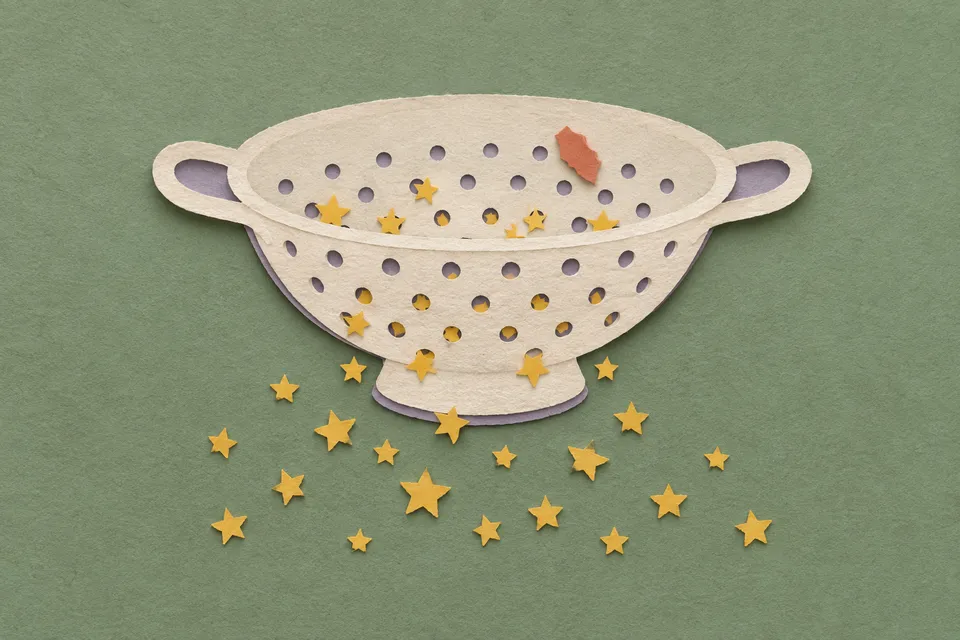
Does praise fade quickly while a single critical remark lingers for days? Self-esteem that keeps dropping is often not about you falling short, but about praise landing on your outer self while criticism sticks in your inner self.
The “you” in this story, is it really you? See my Social & Private self · free →
After the meeting, your team lead says, “Your materials this time were really clean.” You smile and say thanks, but that isn't what comes to mind on the way home. It's the moment mid-meeting when someone asked, “But where did this number come from?” The praise faded before you even got in the elevator, but that one question follows you into the night. It replays while you're washing up, while you're lying in bed on your phone, and in the end it lands on “Why am I so careless?”
Days when self-esteem drops usually look like this. Nothing big happened, yet the good words leak away and only the painful ones stay. In this piece we'll unpack why that tilt happens, which grains feel it more, and how to find your way back on the days you drop.
Watch the moments self-esteem drops, not just how high or low it is
Even people who say “I have low self-esteem” aren't low all day long. When they're eating with people they like or breezing through familiar work, they're fine. The collapses happen at particular moments: right after being evaluated, on days short on sleep, on nights left alone, right after hearing someone else's good news.
That's why, if you only look at self-esteem as high or low, there isn't much you can do. But look at it as “when, and after what, does it drop?” and you find places to work on. The fact that the moments are predictable isn't proof that you're someone who falls short. It means this is a reaction that repeats under certain conditions. Conditions can be spotted, and once you know them, you can prepare.
Praise goes to your outer self, criticism goes to your inner self
This is where the idea of a social self and a private self comes in handy. Everyone has a you around people (the social self) and a you alone (the private self). The farther apart these two seats are, the more praise and criticism land in different places.
When you're praised, a thought like this flickers through you: “They only see how I look from the outside. They don't know how much I was scrambling.” Praise feels like a verdict on a well-prepared surface, so it never reaches your inner self. Criticism, on the other hand, feels like “Finally, I've been found out.” It seems to have pierced the surface and touched the real you, so it sinks in far deeper.
That's how good words pile up on your outer self while painful words pile up on your inner self. On the outside you're doing fine, but on the inside you keep getting whittled down. It's not because you're lacking. It happens because where the words land is tilted to one side.
This setup has one more nasty loop. Because you feel empty inside, you polish your outward self even harder to be recognized. Then the praise increases, but it only goes to the even more polished outer self. The distance between the two seats actually grows, and the feeling that “people don't know the real me” gets bigger. That's why the harder you try, the emptier you feel.
Which grains waver more often?
Wide emotional amplitude. People whose hearts surge at small things easily take a single criticism as a verdict on “all of me” rather than on “this one thing.” A conclusion reached while feelings are running high feels much heavier than it really is.
High accommodation. People who read others' reactions finely easily treat those reactions as their own score. If the other person's face stiffens even a little, it feels like points were deducted. It's a grain where the yardstick you measure yourself with keeps drifting outside.
High sociability. People whose energy flows among others waver in stretches when the back-and-forth slows down. When weekends without plans pile up or messages thin out, they start to wonder, “Does no one want me around?” At times like these, it's often less that self-esteem dropped and more that the signals they usually get were briefly cut off.
Check for yourself
Think back over the last week or two and count how many of these apply.
- When you're praised, “I just got lucky” or “it's nothing” comes out first.
- Scenes where you were criticized stay vivid for days, down to the exact words.
- The later the night gets, the harsher your thoughts about yourself become.
- When someone speaks well of you, you assume it's because they don't really know you.
- You file what you did well under “just expected” and what you did badly under “so typical of me.”
- On days when your body is tired, the same words hurt far more.
Which lines you marked matters more than how many. If you marked the first or fourth line, you're on the side where praise doesn't reach inside. If it's the second or fifth, you're on the side where criticism sinks in too deep. If it's the third or sixth, time of day and physical state are playing a bigger role than self-esteem itself. Depending on which side you're on, the method to try first below will differ.
Five ways to come back on the days you drop
- Write down the moment you dropped in one line. Note only the time, the trigger and your physical state, like “Tuesday 11 p.m., got presentation feedback, skipped dinner.” After a few entries, your own conditions start to show. Once you can see them, instead of “I'm just like this,” you can say “Ah, it's that condition again.” If the checklist above pointed to time of day and physical state, simply putting off big decisions or long conversations on those days makes a big difference.
- Send praise to your inner self. Instead of “it's nothing,” try accepting it with “Thank you, I put a lot of care into that part.” Then silently add one more line: “Yes, I was scrambling, but I'm also the one who pulled it together and finished it.” It's practice in linking praise not to your surface but to the you who worked hard behind it.
- Shrink criticism down to the size of an action. “Why am I so careless?” is a sentence aimed at your whole self. Change it to “I didn't cite the source for the table on page 3.” An action-sized sentence can be fixed, and once it's fixed, it's over.
- Postpone nighttime verdicts until morning. A tired night alone is when your inner self is at its weakest. Any “I'm hopeless” that comes up at that hour, just write it in your notes and reread it the next morning. Read in the morning, it often feels like an exaggeration.
- Show your inner self to one person who knows it. An “even so, you did well” from someone who knows how much you scrambled lands in a different place. You can trust it because it was said to your inner self, not your surface. At first, bringing out just one sentence like “Honestly, I was really anxious while preparing that” is enough.
What this doesn't mean
This piece isn't trying to stick a “low self-esteem” label on you. Having days when you waver isn't a defect; it can also mean your wish to do well is that big. It isn't strange that criticism stays with you painfully, either. Remembering painful words well is something everyone does, and this piece only talks about keeping those words from spreading into “all of me.”
The cause isn't always inside you, either. If you're in an environment where you keep hearing words that tear you down, you may need to look at that environment before trying to fix yourself.
This piece is written to help you understand yourself and does not replace psychological diagnosis. If your thoughts about yourself have run only dark for weeks, or they're heavy enough to make daily life hard to keep up with, don't hold on alone. Talk with a professional counselor.
Even if you drop, you just need a way back
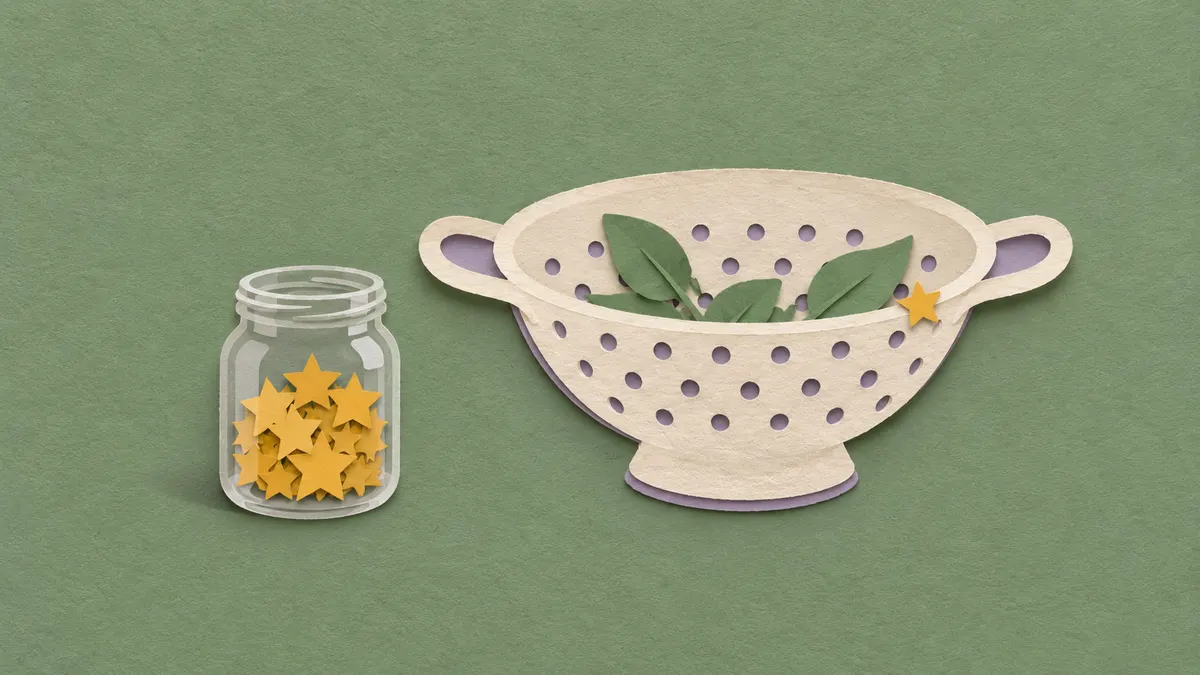
Self-esteem isn't a score you raise once and you're done. It's closer to the strength to waver and come back. When you know where you drop and let good words reach your inner self, the way back gets a little shorter each time. How to build self-esteem over the long run continues in How to build self-esteem, when just deciding to isn't enough, and the heart that often wavers because of comparison continues in I keep comparing myself to others. The free personality test shows the you around people and the you alone separately, on five personality traits. Once you can see the distance between those two situations, it may become a little clearer why praise never reached inside.
The “you” in this story, is it really you?
See my Social & Private self · freeFree · Start without sign-up