The Drifting Sunshine
Type SCUAI
Warm everywhere, anchored nowhere
S
SocialC
CalmU
UnstructuredA
AccommodatingI
InquisitiveWhat's your alter ego?
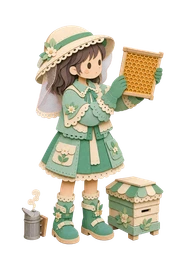
What they're like
When you walk into a room, the mood changes. Without doing anything in particular, you draw people around you naturally. You can fall into easy conversation with a stranger within five minutes, and melt an awkward silence with a light touch. But this isn't a calculated social skill. It's that you're genuinely interested in people, and that interest comes through to them as it is. People just feel at ease around you, for no obvious reason.
Comfortable anywhere, yet often unsure whether you yourself are comfortable.
Keep readingShow less
Emotionally, you're remarkably steady. Even when conflict erupts around you, even when someone gets worked up and raises their voice, you aren't easily shaken. That steadiness makes you a still point in the storm, and people instinctively turn to you when things get hard. You take in other people's feelings as they are, without judging them. And you know that alone can be an enormous comfort.
You don't like being tied to a plan or schedule. Waking up with no idea what you'll do that afternoon doesn't make you anxious. In fact, the most memorable moments tend to be born inside that spontaneity. An alley café you wandered into, a gathering of strangers you joined on a whim, an afternoon you'd set aside for nothing drifting somewhere unexpected. Your life passes through richer scenery precisely because there's no fixed destination.
New things, unfamiliar ideas, perspectives from other cultures don't bore you. If anything, your eyes light up in front of them. Rather than digging deep into one field, you enjoy moving lightly across many worlds, finding the interesting part of each. That wide-ranging curiosity makes you an engaging conversation partner anywhere, and lets you connect easily with all kinds of people. A few of those light connections can take root over time. When the one who never stays finds a place worth staying for, that warmth deepens in one spot.
Moments you might recognize
You quickly remember the name of someone you've just met, and you naturally call them by name during the conversation.
Even with no schedule for the day you are not anxious. If anything, you look forward to a day like that.
When someone's expression is dark, you notice without their saying it and quietly sit beside them.
When someone talks passionately about a topic you had no interest in, you grow interested along with them.
When you get pulled onto a path that wasn't part of the plan, “oh, this could be fun too” comes before any irritation.
You have confidence that you will not make the mood awkward at any gathering.
At a travel destination you grow close to locals fast, and you pick that as the highlight of the trip.
Even when the other person gets worked up and angry, you don't get worked up with them. You react calmly.
Your interests are so varied that people often ask you, “so what do you actually like?”
In conversation you often hear, “I'd never thought about it that way.”
Strengths
Connecting by Instinct
Building relationships is, for you, closer to breathing than to effort. You quickly read who a person is and what they respond to, and you approach them naturally in a way that fits. This sense lets you mingle easily with people of all backgrounds and adapt quickly even in unfamiliar environments.
Emotional Steadiness
Even when everything around you is in chaos, you don't waver. This steadiness becomes a quiet safety net for the people around you. You have probably watched a heated situation settle simply because you stayed calm. It's stability that comes not from suppression but from a genuine inner balance.
Improvised Adaptability
Even when the plan changes or an unexpected situation hits, you quickly catch the new current. This flexibility becomes an especially strong asset in fast-changing environments. While others are flustered by the change of plan, you're already looking for opportunity in the new situation. This attitude is often a real help to the people around you.
Acceptance without Prejudice
You have an exceptional ability to accept people as they are. You keep an open attitude even toward people with different values, different lifestyles, and different backgrounds. Thanks to this acceptance, all kinds of people feel at ease around you, and you can blend naturally into any group.
Achilles' heel
Connections that Never Deepen
Relationships come to you easily and slip away just as easily, and the ones that slip away keep piling up. You're warm everywhere and well-liked everywhere, but when you count how many relationships you can truly open up in, the number may be smaller than you'd think. The wider your circle spreads, the shallower it gets, until one day all these connections feel hollow at once.
Drifting with no Destination
Spontaneity and flexibility are strengths, but without direction they become drifting. You chase whatever looks interesting, and at some point you no longer know where you are or where you're headed. With no long-term goal and nothing you have committed to, meaningful achievement is hard to build. Freedom grows richer when it has a direction.
Comfort Kept by Avoiding
Being emotionally steady, you sometimes end up avoiding uncomfortable feelings or conflict without meaning to. If you leave everything to take its natural course, the things that needed resolving drift away, and what has piled up comes back later as a bigger problem. Protecting your comfort can become a shield that blocks your growth.
Depth Left Unexplored
With a stable, light emotional state as your default, you don't look closely at what lies deep inside you. You tend to let uncomfortable feelings pass by even when they rise up, and so you sometimes miss important emotional information. When your self-awareness runs shallow, it's hard to find what you truly want.
Work and hobbies that suit this type
Work that fits
- Preschool teacher
- Tour guide
- Florist
- News anchor
- Service planner
Hobbies to try
- Picnics
- Dance
- Cafe hopping
- Polaroids
- Festivals
Hints, not verdicts. Take only what pulls at you.

How this type reads alongside MBTI · ENFP-A
- SSocialEExtraverted
- IInquisitiveNIntuitive
- AAccommodatingFFeeling
- UUnstructuredPProspecting
- CCalm-AAssertive
MBTI and this test measure personality differently, so this is not an exact conversion. Use it as a shared reference for reading both results together.
See the MBTI ENFP page →More to this type
Motivations and behavior in different situations. Answer more questions to see a fuller picture.
Core motivation
A motivation often seen in The Drifting Sunshine types
The one who reaches out first
Other people’s circumstances register before their own
Not a verdict, just a tendency we often see in people who share this code.
How you shift by scene
A scene pattern often seen in The Drifting Sunshine types
Steady in any room
Someone who keeps the same register in public and alone.
Individual variation runs high; your own responses take priority.
In love
How they love
In a relationship you become an easy presence who puts no burden on your partner. Being emotionally steady, you do not over-react to their shifts of mood, and you generate a natural, light energy when you are together. You like sharing new experiences and place value on a free atmosphere in the relationship. You are the type who shows love through small everyday warmth rather than expressing it in grand declarations.
What they need
The partner you need is someone who does not suppress your freedom. A partner who manages your daily schedule, presses for future plans, or endlessly asks “where is this relationship going?” will wear you out. Someone comfortable to be with, who respects each person's space and can enjoy a spontaneous adventure alongside you, fits you well. Better still if they are intellectually stimulating too.
Recurring patterns
The pattern to watch in your relationships is the tendency to start putting distance between you exactly as intimacy deepens. It is not deliberate, but once the relationship starts to feel “heavy” you fall back in search of freedom. Your partner can read this as a decline in interest and be confused. Your emotional steadiness can also land on them, at times, as “I don't think you really feel what I'm feeling”.
What to mind in the relationship
What you need to practice is redefining commitment in a relationship as a connection you chose rather than a loss of freedom. It matters to learn through experience that deepening intimacy can be abundance rather than burden. Practicing a slightly more active response to your partner's emotional needs helps too. Your warmth is real, but the relationship becomes sturdier when you consciously widen the ways you express it.
What triggers the guard
Frustration is triggered when your partner demands excessive planning or definition of the relationship, or judges your free-running energy as “changeable”. Your energy also drains sharply when time together starts to feel like obligation rather than pleasure, and especially when you keep ending up having to hold their emotional swings.
How it shows up
Rather than expressing dissatisfaction directly, you start putting distance between you naturally. Your replies slow, planned meetings get pushed back, and the time you spend together thins. It is hard for your partner to know what happened, and it feels to them like drifting apart for no reason.
What brings them back
Once your time to recharge alone has passed, you come back naturally. You reopen the relationship through light conversation or a shared activity, but if what triggered it is unresolved the same pattern repeats. You prefer restoring the atmosphere naturally to resolving the conflict directly.
Chemistry with other types
Which type am I?
83 questions measure your social and private selves
at the same time.
Start the free test →at the same time.