When Deciding Alone Makes You More Anxious
Fine Choosing Together, Shaky on Your Own
If you choose easily with someone but get unusually anxious when you have to decide alone, it isn't a lack of judgment. Something the person beside you used to do has gone missing. Here's how to set up the supports of confirmation, a place to think out loud, and shared responsibility on your own.
The “you” in this story, is it really you? See my Social & Private self · free →
You've been looking at places to live on your own for weeks now. The one you saw today gets plenty of sun and is close to the station. The agent says that if you don't sign today, someone else might get it first. You pull out your phone, send the photos to a friend, and wait for a reply. Until it comes, you just can't decide. The strange part is that at work, you're someone who makes decisions several times a day. You settle team schedules and pick which vendors to go with without hesitating, yet standing in front of one home of your own, your fingertips go cold.
Some people find deciding hard no matter what, and others choose well with someone else but get unusually anxious only when they're on their own. This piece is about the second kind of person. Let's look at what the person beside you was doing when you decided together, how that empty spot feels different depending on your traits, and how to fill it even on your own.
The person beside you does more than you think
When you decide together with someone, that person quietly does three things. The first is confirmation. A simple “Looks good to me” becomes a stamp saying your judgment isn't far off. The second is a place to think out loud. As you explain things to them, the reasons tangled up in your head fall into order. The third is sharing the responsibility. Even if it goes wrong, you can say, “We both said it was good.”
When you decide alone, all three disappear at once. Your judgment is the same as ever, but the supports that held it up are gone. So the anxiety of deciding alone is less “I'm someone who can't make decisions” and more “I'm someone who hasn't had as much practice deciding without supports.”
That's also why you decide well at work. Decisions at work come with meetings, with standards, and with a team that shares the responsibility. The you around people makes decisions standing on those supports. Decisions about your own life, on the other hand, have to be made by the you when alone, and there are no supports in that spot.
There's one more thing. The you around people has made plenty of decisions, but the you when alone has mostly been in charge of feeling rather than deciding. You're used to feeling that you like something, dislike it, or feel uneasy about it, but gathering those feelings up and picking one is something you've always done together with someone. For the you when alone, deciding is simply something you haven't practiced much yet, not something you can't do.
What throws you off when it's missing depends on your traits
High on Social. These are people whose thoughts get sorted out as they talk. When they only mull things over in their heads, their thoughts keep circling the same spot. What this trait misses most is a place to think out loud. Sending photos to a friend and waiting for a reply is often less about getting an opinion and more about finding someone to turn the thoughts over with.
High on Accommodating. These are people whose usual standard for deciding has been “Is everyone okay with this?” When choosing together, the other person's expression served as the standard, but alone that standard vanishes, and they're at a loss for what to go by. What this trait misses is confirmation.
A wide emotional amplitude. These are people who feel, in advance and at full size, the regret they'd feel if things went badly. The thought that deciding alone means carrying that regret alone makes the anxiety much bigger. What this trait misses is someone to share the responsibility with.
High on Organized. Give them standards and a procedure, and they decide faster than anyone. That's why they decide well at work. But decisions about their own lives come with no set procedure, so they don't know what to weigh first and just keep gathering information. What this trait misses is a procedure more than a person.
If your decisions tend to be slow in general, we covered that separately in Can't Make Decisions, Am I Just Indecisive?.
Check for yourself
- You tend to decide quickly when you're choosing with someone.
- When you have to decide alone, you ask several people for their opinion.
- When the opinions differ, it actually gets harder to decide.
- Even after deciding, you can't relax until someone tells you, “Good call.”
- Decisions about your own life are harder than decisions at work.
If the first and fifth lines apply, it's more likely a matter of supports than of judgment. If the second and third lines both apply, gathering opinions may actually be feeding your anxiety. You're trying to set up several supports at once, and they end up bumping into each other. The fourth line is the case where the support of confirmation is missing most. Then it helps to prepare a way to confirm things for yourself after you decide, ahead of time.
How to set up the missing supports on your own
| What the person beside you used to do | What to do instead when you're alone |
|---|---|
| Confirming that it's okay | Check it against three criteria you wrote down before deciding |
| A place to think out loud | Write it in your notes app as if you were explaining it to a friend |
| Sharing the responsibility | First sort out whether the decision can be undone |
The right side of the table can't fully replace the person beside you. But it shrinks the anxiety to a size you can handle, and above all, it hands ownership of the decision back to you.
- Set your criteria first, then look at listings. “Within a fifteen-minute walk of the station, a room that gets sun, a limit on the rent.” If you write your criteria down before deciding, the confirmation you need at the moment of choosing comes from that list, not from a friend. For people high on Organized, this list becomes the procedure itself.
- Write it as if you were explaining it. In your notes app, start with “The reason I want to pick this place is” and keep going as if you were talking to a friend. As you write, the reasons line up the way they do when you say them out loud. If you're high on Social, recording yourself talking into your phone works well too.
- First ask whether it can be undone. If it's a decision you can change later, it's fine to settle it a little faster. If you save your time for the decisions that are hard to reverse, the weight of the responsibility you carry alone gets a lot lighter. You can change the color of a sofa later with a cover, but you can't easily change the length of a lease. Save your deliberating for things like the lease.
- Ask just one person for their opinion. “I'm going to make the call, but I'd like to hear what you think.” Say that, and ask only one person. When you say up front that you're the one deciding, the opinion you hear becomes a reference, not a standard. The more people you ask, the more standards you end up with, one per opinion, and the easier it is to waver.
- Once you've decided, don't ask again. Once you start asking everyone “I made the right call, right?” after deciding, the anxiety grows all over again. Instead, write down three lines on why you decided this way, and reread that note whenever you waver. It helps to also write down what you knew at the time. Even if the result disappoints you later, you can see that the you back then chose as well as you could with what you knew.
Don't read it this way
- Finding it hard to decide alone doesn't mean you're a dependent person. Making better decisions when you think things through with others isn't a weakness. It's a style. Liking to choose together with someone also means you value your relationships.
- It doesn't mean you have to make every decision alone, either. Asking for opinions is fine. The point is not to forget that the decision is yours.
- Setting up supports won't make the anxiety disappear completely. A decision made while you're still a little anxious can be a good decision too.
- If the anxiety is so big that you lose sleep over a decision or your daily life grinds to a halt, don't just try to hold out alone. Consider talking to a counselor who works with mental health.
Wrapping up
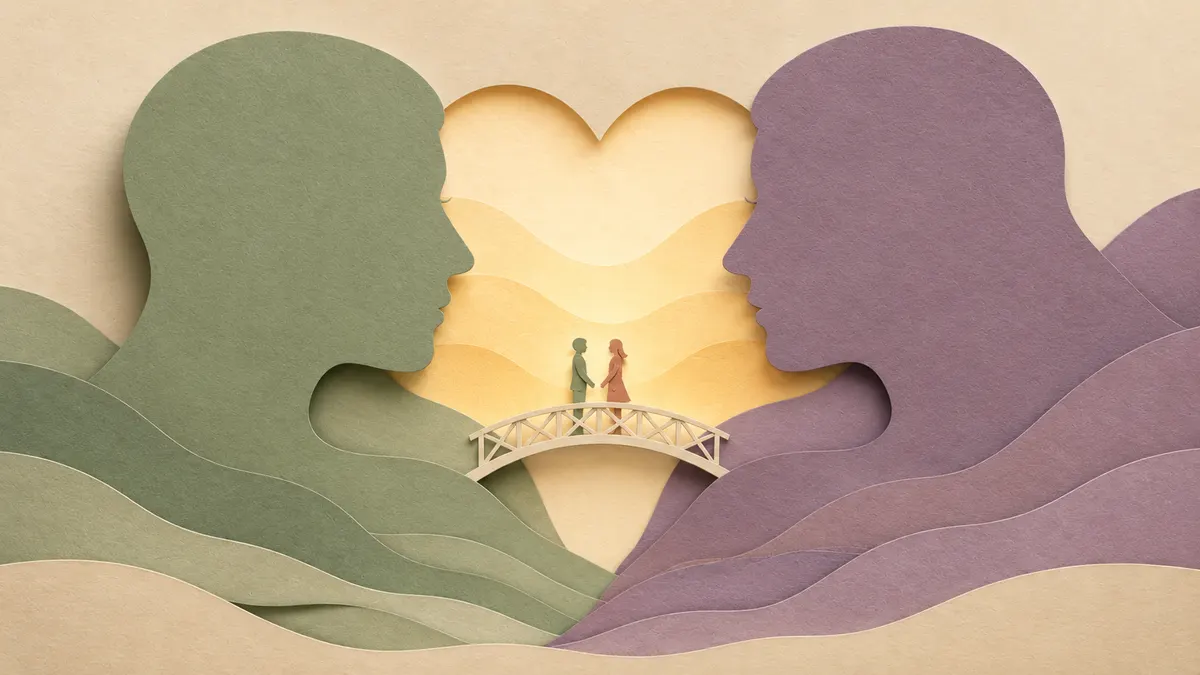
People who feel anxious deciding alone aren't short on judgment. They're standing in a spot where something that always held them up has gone missing. If you fill that spot one piece at a time, with criteria, with notes, and with the question of whether it can be undone, the you when alone can practice deciding too. Even if the first few times still make you nervous, each decision you made alone that turned out fine adds up, and that becomes the support for your next decision.
The free personality test shows the you around people and the you when alone on five personality traits, separately. Seeing where you land on Accommodating and Social in each of those two situations shows which support you miss most when you decide alone.
This piece is meant to help you understand yourself and does not replace psychological diagnosis or treatment.
The “you” in this story, is it really you?
See my Social & Private self · freeFree · Start without sign-up